A loose bolt or unstable tread can point to larger fire escape problems or unresolved violations. We assess the affected bolts, treads, railings, ladders, balconies, and wall connections. Then we document the condition, and determine whether it can be fixed in place or needs a larger solution.
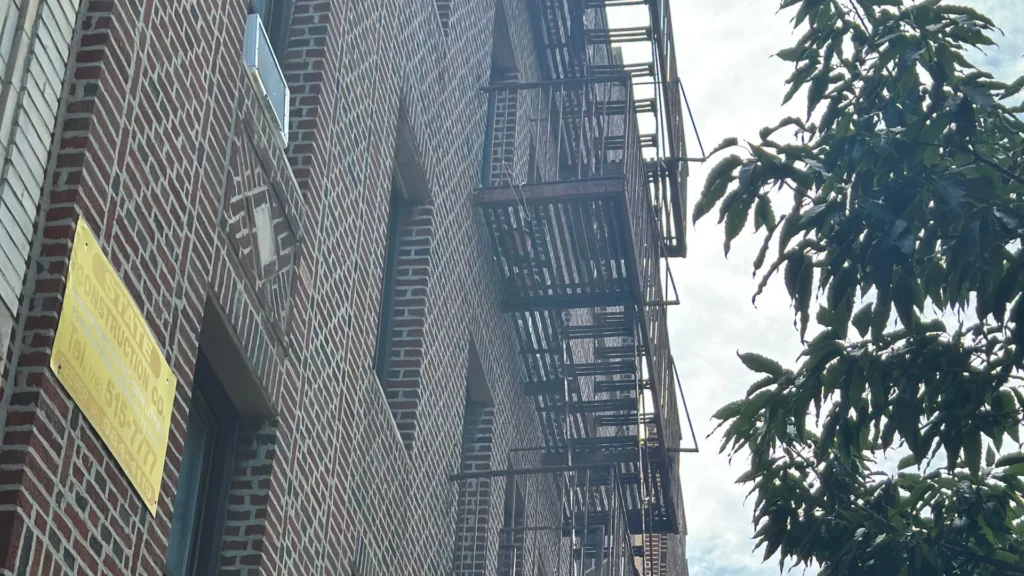
Structural failure often starts at the connections. Property owners usually spot this when they notice orange rust bleeding out from connections. It can also include visible gaps between steel plates, or individual pieces that rattle when touched.
We handle fire escape bolt replacement in NYC when corrosion or deterioration has compromised the original fasteners, replacing them with suitable structural bolts as part of the repair. Thus ensuring every connection is mechanically locked to withstand maximum load capacities.

A frozen drop ladder is one of the most common and dangerous building violations in the city. You will notice this failure:
For drop ladder repair on NYC fire escapes, we address seized or misaligned components to restore smooth mechanical operation and reliable secondary egress. We clear out decades of frozen paint from the release hooks, realign the guide tracks, and lubricate the main pivot points.

The main platforms take the brunt of the weather, leading to localized water pooling. You can identify platform failure by looking for sagging floor grates, or a bouncy feeling when you step onto the platform. Severe section loss occurs when the steel flakes away in thick, wafer-like layers, leaving the metal dangerously thin.
That’s why our fire escape balcony repair NYC process involves cutting out these structurally compromised sections of the platform. We then weld or bolt matching new steel sections into place, reinforcing the structural framing.

Stairs and railings face constant physical wear. Failure looks like stairs that tilt forward, a stringer (the side channel holding the steps) pulling away from the platform, or a guardrail that shakes when gripped.
We cut out cracked or detached stair treads and replace them with new steel units. If a railing is loose, we reinforce the connections, weld broken joints back together, and ensure the entire assembly remains completely rigid under lateral pressure.

The structural stability of the entire system relies entirely on its wall anchorage. You can see this failing if you notice cracked brickwork around the steel supports, rusted anchors pulling out from the building, or interior water leaks near the mounting points.
We repair these critical connections by deeply inspecting each masonry penetration. Our team removes the failing anchor, patches and reinforces the surrounding brickwork, installs heavy-duty anchors, and seals the opening with exterior-grade waterproofing compounds to prevent future water intrusion.
A component may be suitable for localized work when the surrounding steel remains sound, and corrosion has not progressed beyond a practical repair threshold. For example, deteriorated hardware does not automatically mean the entire assembly needs to be replaced. Likewise, localized section loss may have a different solution from widespread deterioration through major structural members.
Replacement becomes a consideration when corrosion has caused substantial section loss, or the remaining steel no longer provides an adequate basis for localized work. The decision should be based on the condition, corrosion depth, and available information about load capacity.
The scope should follow the documented condition. Where an engineer or other qualified professional is involved, their assessment can determine structural requirements. Our role is to identify visible conditions, document the work required within our scope, and carry out the appropriate physical work.
A property owner may arrive with an inspection report, engineer’s findings, defect list, or a notice involving DOB or HPD. The useful response is to connect each documented condition with the physical work required. If a violation is involved, the owner’s agency requirements and correction process need to be followed separately from the physical work.
We document the visible defect and its location before work begins. Photos help connect the requested scope to the actual component and provide a record for the owner or property manager.
Fire escapes often sit above sidewalks, entrances, windows, and neighbouring property. Access equipment, scaffold, pedestrian, and the surrounding work area are considered before work starts.
Some steel work can be completed through in-house welding when the surrounding structure and access make that appropriate. In other situations, removing a section may be more practical.
New steel work can disturb the existing protective coating. After the physical work is complete, the affected area may need appropriate preparation, primer, and recoat work. The purpose is to restore the protective coating system.
In 2022, our documented scope at 8-18 Queens Plaza South combined structural inspection and welding. The work focused on identifying conditions in the existing steel and carrying out the required welding rather than treating the structure as a simple repainting project.
At 147 Beach 113th Street in Rockaway Park, our 2015 scope covered repair and restoration. Its coastal location makes it a distinct case within the project record. The existing steel had to be addressed as part of a broader restoration rather than routine maintenance.
Address a problem when you notice movement, loose or missing hardware, a drop ladder that does not function properly, deteriorated treads, damaged railings, significant corrosion, or questionable wall connections. A documented defect should be assessed before deterioration progresses or affects another connected component.
A deteriorating component can continue losing material or compromise the connection around it. Some conditions can also become more extensive when water and corrosion remain active, turning a localized problem into a larger scope of work.
Common observable problems include corroded bolts, loose treads, damaged railings, malfunctioning drop ladders, deteriorated balconies or platforms, corrosion around connections, and deterioration where the steel attaches to the building.
The process starts with identifying and documenting the failed component and determining whether the surrounding steel and connection remain suitable for localized work. Depending on the condition, the work may involve hardware replacement, steel work, in-place welding, component replacement within the existing assembly, and recoating afterward.
Yes. Work can be planned around tenant occupancy, access, windows, egress, sidewalks, and the building's normal use. The work area and access requirements should be established before physical work begins.
Send us a photo and tell us what you’ve noticed. Our in-house welding crew will assess the repair scope, backed by $2M in general liability coverage.

We’ve been working with Queens property owners since 2004. Whether the structure needs coating, repair, welding, or restoration, we keep the work with one accountable crew.
Copyright © 2026. All rights reserved.